Stuck in a Habit: Is Predictive Adaptation Possible?

Editor’s Note:  I was thinking about this post in terms of a session on Predictive Adaptation I sat in on last month. Dr. Liz Alexander moderated. She is considering a book on the subject which boils down to:

Can we stay tuned in enough to adapt prior to a change in our marketplace?

As the shelf life of companies grows shorter and shorter, the ability to adapt is on the short list of survival strategies. How do we cultivate it? One way is to not be stuck in our habits.

I’m a tea drinker, I have a teapot with an infuser, numerous immersion devices and a cabinet stuffed full of teas – black, herbal, medicinal, green. When I drank coffee, it was the same scenario, with different props. My freezer was full of Peets’ (now, alas, part of Starbucks) Major Dickinson blend and my cabinet, coffee brewers — drip, stovetop, percolator, French and Italian press – you get the drift.

Habits can lock us into rigid ways of thinking and doing.
Habits can lock us into rigid ways of thinking and doing. The solution?  Try something new.

Two weeks ago I ran out of tea. I reordered in a such a panic that I used an old address.  My tea — a special blend I’d grown to depend on to get me out of the door in the morning — never arrived. The tea blender refused to fix the delivery snafu.  So I didn’t reorder.

That’s how one habit (getting in a snit when things didn’t go my way) forced me to re-evaluate another (my tea drinking compulsions).  I was forced to rethink that morning ritual. Now I’m brewing tea bags (Choice) I buy at the grocery store.  I don’t enjoy my tea nearly as much, but it’s saving me time. Unintended consequence:  I’m actually getting to work on time.

Habits can be helpful, but they can also lock us into position. I’ve noticed that whatever it is hoard is a habit – wine, ice cream, tea, coffee, graham crackers. In the same way, my response to the tea blender was a habit — he chided me about my carelessness, I felt like a bad child, and I didn’t want anything more to do with him.  Other habits I’ve flagged since my tea disruption:

  • Who I greet in the morning
  • Where I walk the dog
  • What I do with my spare time
  • Who I telephone to spend time with
  • How I think about my abilities (and shortcomings)
  • The books I read
  • How I view people with ideas that are different from mine

A search on “habits” took my to former Googler Matt Cutts’ Ted Talk, “Try Something New for 30 Days.” (Editorial note:  Why is the guys can look like slobs and the women have to look like they’re ready for the Academy Awards?)  Regardless, I’ve resolved, for at least 30 days (when Choice tea bags will probably already be my new habit), not to reorder tea.  We’ll see what happens.

Who knows what I’ll discover.


What Does An American Look Like?

My friend Prithvi was sworn in this week as a U.S. citizen. Here’s an excerpt from our conversation about the experience:     Swearing in

The ceremony was beautiful.One thousand one hundred sixty-six (1,166!) people from 97 countries participated. After waiting outside for about 30 minutes, we took the oath and a lovely band played the “Star-Spangled Banner.”  It was an emotional moment.

Several judges spoke about the United States being a nation of immigrants and as new citizens, our enriching that heritage. They encouraged us to tell our stories and enrich America with our culture.

A woman judge told a story about a Bangladeshi immigrant who became a citizen.  When he was shot after 9-11, he sued to stop his assailant’s execution. We were strongly encouraged to vote:  There were voter registration desks in every corner of the building.

The head of the immigration service there, whose grandfather was from Mexico, asked us what an American looks like.  Then he said, “This!” and gestured at us.  Each country was called out, and the people of that country were asked to stand. Then he said, “Mexico,” and everyone remaining stood up.  There was roar from the stadium.

Prithvi is from Mangalore, India. She is brilliant and well-rounded: a technical manager at Apple, the mother of a three year old, the wife of an equally brilliant engineer.  She also runs a non profit for Indian children. I can’t imagine anyone’s taking issue with her becoming a citizen.

I asked her how it felt to be an American.

I don’t known what that means. I have felt American for a while.  And Indian.  That will not go away.

Prithvi’s experience was a reminder of what we’re about — and it’s not those plastic American flags realtors insist on sticking in everyone’s yard, nor the mattress sales, nor the grocery store aisles clogged with overflowing baskets.

At a time when our world’s politics are compared with — heaven forbid –“Game of Thrones,”  let’s try our best to rise to the occasion, to return some of what we’ve been given — to read, listen critically, write our elected officials and vote. Let’s try our best to make things better.


A Marketer’s Lessons from Brexit

Ever failed to gain support for a smart, admirable product or campaign that seemed like a no-brainer?  Something like conserving water?  Attracting technical talent? Remote storage (until it became the “cloud”)?  Saving for retirement?

So it was with Brexit, a seeming no-brainer turned on its head by lackluster messaging, a failure to get voters to the polls and a strong political environment.

1. “Want to Make Sure No One Listens? Deliver a Boring Message

“One of the things that went terribly wrong with those who were campaigning for Remain was to find a passionate way to defend the European Union,” the English historian, commentator and Columbia University professor Simon Schama, told NPR when the vote to leave the European Union was announced.  “The point of the European Union was to be dull and boring rather than violent and aggressive and bellicose, which it have been for most of its history,”

A successful real estate saleswoman once told me that people buy by emotion, not reason. For Britons, the message of peace, protection and prosperity was drowned out a strong wave of  nationalism stoked by fears of uncontrolled immigration a remote central bureaucracy.   Emotion ruled.

2.  Apply the “what’s in it for me” (WIIFM) test

“A slogan and a message must be aspirational — either give people hope things will get better or that the bad stuff will stop — both, said Ruth Sherman, a political communications analyst, told The New York Times.  “I remember thinking when I first saw [one of Hillary Clinton’s taglines], ‘I’m with her’ — when I saw it, [I thought] ‘Really?’ It’s not my job to be with her. She should be with me.”

The message also has to be strong enough to move people to action. Although 75% of  British 18-29 year olds voted to remain in the EU, these voters did not turn out in sufficient numbers to make a difference in the final result.  And showing up, as Woody Allen reminds us, is 80% of success.

3.  Pay attention

Be it data, news reports or eating lunch with the troops, it’s important to keep you finger on pulse. The ‘Remain’ camp’s ‘Stronger Together’ slogan “failed to ‘personalize, individualize or humanize their campaign,” Frank Luntz, an expert on political messaging told The New York Times.  “The problem with the concept of ‘together’ is that it promotes groupthink…We are in an age of individual action, not collective responsibility.”

4.  We are doing business in an increasingly protectionist environment.

I hope by now you’ve read GE Chairman Jeff Immelt’s graduation speech to NYU’s Stern School of Business.)  Every company is on its own, he warns as “globalization is being attacked as never before. In the face of a protectionist global environment, companies must navigate the world on their own,” he said. “We must level the playing field, without government engagement.”

5.  Yes, it can happen.  Have a plan

The quote I remember most from my first interview with Fred Schmidt of the Capitol Factory was, “Only the economists and realists are planning.”  Everyone thought it was a done deal: Britain would stay in the EU.  Today, United States’ seventh largest trading partner is paralyzed, rocked by what could never happen.

Pay special attention, technology companies.  As Immelt reminds us, the Internet has connected us, but it has not created jobs. Many are questioning the value of globalization and business interests as “elite” and subject to distrust. Stay informed and participate. Organizations like the American Electronics Assoc., the Global Entrepreneurship Summit, many of which cluster around universities, educate elected officials and lobby business interests.  Be active, there is strength in common interest.


Beyond likeability: Women leaders on issues that matter

Perhaps we’re getting over the likeability debate. This week, two women at the top of their games cut to the chase and point out a few elephants in the room.

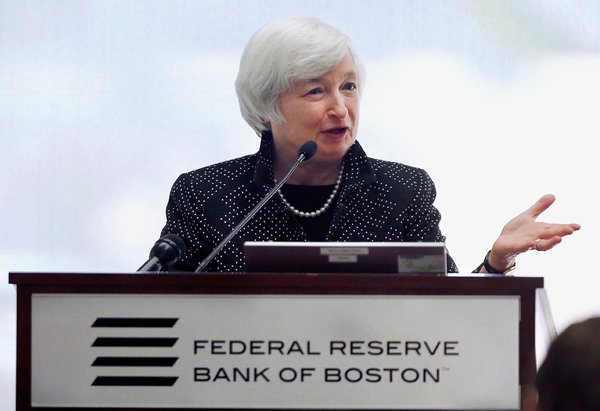
Janet Yellen used her role as Fed chairman to start a conversation on economic opportunity. Why are more Americans locked into a vicious cycle of poverty? “I cannot offer any conclusions. (But) I do believe that these are important questions.”

You bet they are. And thank you, for having the guts to say so.

Janet Yellen inviting a discussion on the growing gap between rich and poor
Fed Chairman Janet Yellen stepping out of her role to invite a discussion on the gap between rich and poor

Then, last evening I watched Pulitzer Prize-winning author Marilynne Robinson talk about, among other things, why we don’t seem to be able to have a civil conversation about anything that matters. I wish I had a transcript, so I’m paraphrasing, but in essence she marveled about our penchant for turning complex issues into a SNL skit. As above, so below: entertainment trumps facts and respectful debate.

Pulitzer Prize winning Marilynne Robinson on the dumbing down of our public conversations

Both Yellen and Robinson have white hair. If ever we wanted role models, here they are, juggling, multitasking their way through successful lives, showing the rest of us how it’s done. Both went to public schools; Robinson was a single mother. It’s interesting Yellen waited until she had the top job before speaking publicly about a topic outside of her mandate. She was a loyal vice chair. Unlike some of her colleagues, she supported her team.

My takeaway was this: “Don’t waste my time. Let’s get together to work on things that matter.”

Be Great

Each of us can be great — in our own way.  Great human beings don’t spring full-blown from Zeus’ head like Athena, the Greek goddess of wisdom and inspiration.  The trick lies in uncovering, then nurturing its seed.

Thanks to technology (and I include publishing), we’ve no shortage of examples — in business, the arts and politics.  We can read, see and hear the stories of people who discovered their gift and then overcame their circumstances, doubts and fears to be bigger, broader and richer (if that’s what they wanted).

Work at being great -- in your own way. (Courtesy of Greg Bartley/Camera Press, via Redux, The New York Times)
Work at being great — in your own way. (Courtesy of Greg Bartley/Camera Press, via Redux, The New York Times)

Many of us have to dig to find our seed of greatness.  Maybe it’s writing, or developing great relationships or designing gardens.  But believing in ourselves — and our unique greatness — is pivotal.  Otherwise, our hands are tied.  We fail to act.  So we have to look for examples and learn from others.

Take entrepreneurs.  Entrepreneurs are energizers.  They charge us up with their self-confidence and sheer drive.  Last week I sat in on a talk by John Arrow, the brilliant young CEO of Mutual Mobile.  Arrow told about his first entrepreneurial effort, a grammar school newsletter that was shut down for profiling students’ popularity.  (Sounds a little like a Facebook prototype, yes?) While his co-conspirators were punished by their parents, he was praised for his business acumen.  That chutzpah — and vision — has taken him far.

Or statesmen.  Nelson Mandela believed in a cause so great it dwarfed the failure and suffering he endured to become an icon of humanitarianism. Bill Keller‘s coverage drew from a 2007 interview.  Mandela was asked how he kept his hatred in check:  “… his answer was almost dismissive: “Hating clouds the mind.  It gets in the way of strategy.  Leaders cannot afford to hate.”  My sense is Mandela, although born the son of a tribal chief, was not always so adept a diplomat. I listened to a former colleague describe him as a “head knocker.”  If that’s the case, then Mandela had to master his anger to achieve his goals.

Or musicians.  A quote from the late, great Lou Reed, who as a young man had been through electroshock therapy, and in his music never seemed too concerned about popular opinion.  He followed his muse:

I’ve never thought of music as a challenge — you always figure the audience is at least as smart as you are.  You do this because you like it, you think what you’re making is beautiful.  And if you think it’s beautiful, maybe they think it’s beautiful.

As we wind down another year, rushing madly along, let’s go for one thing:  Let’s try for greatness.  Or as Steven Pressfield puts it,  … Follow your unconventional, crazy heart.  Do the work.

Stay Curious Despite the Shutdown: Try edX

“We’re looking for the international space station,” my elderly neighbors said as they looked up at the night sky.

“What does it look like?”  I asked.

The night sky on Oct. 13, 2013 in Austin, Texas.  That's Jupiter above the tree. Courtesy Night Sky Network.
The night sky on Oct. 13, 2013 in Austin, Texas. That’s Jupiter above the tree. Courtesy Night Sky Network.

“We’re not sure, but it’s supposed to be out here someplace.”

We spend a lot of our time looking for things without knowing exactly what we’re looking for.   Ideally, there’s a sense of wonder, but also frustration and alas, impatience.

Whether it’s a job, a new client or partner.  We know they’re out there, somewhere.  But where?

The trick is to stay curious, so curious we keep trying.

To keep my curiosity in tune, I’m trying our edX, specifically Dr. Micheal Webber’s Energy 101 MOOC.  I’ve been pleasantly surprised.

The content is terrific, especially the widgets.  I find myself sliding over maps of Europe, Africa, India and South America to get a sense of our world — in constant flux.  Want to see fracking in action?  Stephen Rountree’s 3D infographic is one of the best I’ve seen.

But it’s the sheer scope of the effort that sparks my imagination.  Comments and introductions from people all over the world – Iran, Palestine, Iceland.

It’s like the night sky; makes you think anything is possible.  (Even this photo, taken by intrepid volunteers on Astronomy Day 2013 by the Night Sky Network, despite the federal shutdown)

Delete that photo!

A  friend whose opinion I respect forwarded me a photo taken when I did not — shall we say — look my best. It got me thinking:  Does this require action?  Should I tighten up my reputation management?  Get a makeover?  What do geezer rockers do about this sort of thing?  Does Robert Plant worry about his hair?  Closed eyes?

Can it get any worse?  Add wrinkles!
Can it get any worse? Always!

We are well on our way in an era of visual communication.  Some people are blessed with telegenic looks and would shine climbing out of a dumpster. Does the way Nigella Lawson looks sell cookbooks?  Of course.  For the rest of us, it’s luck of the draw (or click).  Forget command and control.  I once worked with a top-ranking executive who, confronted with an unflattering photo, dispatched his minions to buy up every available copy of the trade mag in which it appeared, a feat that can never be repeated.  As for prep, the jury’s out. I recently caught myself  reaching over to sort out a no-nonsense entrepreneur’s hair (female).  She’d probably been up since 4 that morning. Working.  Personally, I think candid photography before 9 a.m. is cruel and unusual punishment.

What does our appearance say about us?  My mother, raised a Texas girl, never poured her coffee or opened a newspaper until her lipstick and hair were in place.  I can’t remember a time when she didn’t look beautiful.  Then again, I remember Hillary Clinton’s eulogy at Gov. Ann Richards’ funeral less for what she said (although it was memorable: she touched on just this subject) than that she looked exhausted — like she’d worked all night and still cared enough to show up and honor someone who’d been important to her.

As for me, I’m leaning in the direction of a well-developed sense of humor. That may be the point.

Sitting is the new smoking

A friend gave me the news: Researchers have discovered there is no way to compensate for sitting.  Forget the morning run, yoga, walking the dog, weights. Sitting is the new smoking.

My back and shoulder had warned me. I felt long fingers of gravity pulling me down in the chair, tugging my thoughts and hopes down with them.  Down, down, down.  A change was in order.  A new $500 chair?  An iPad?  Everything investment is a risk.

So I did what any risk-aware 21st century American would do:  I posted my gorgeous Amisco computer desk on Craigslist and waited. I waited and forgot about the desk.  Weeks later, two emails popped up, out of the blue.  Lo and behold, there was a market for the desk.

What to do?  Go with the flow.  Linelle pulled out her $65. cash and took the desk away.  I think she’ll give it a good home.  And when I turned to look at the vacant spot, I had a rush of hope.  So many possibilities!  I could put a table in the middle of the room to use for cut outs and thinking.  I could type standing up (my back had been hurting anyway).  I could rethink my entire working life.

So here I am, in my new phase:  typing on the top of a tiny old bookcase my mother kept in her bathroom.  It’s the right height but a little teetery.  I’ll have to look for a larger surface. I’ll have to innovate.

Change is good. It never comes when we expect or even want it.  But it’s good.

Sotomayor and Chaotic Moon – stay curious, take risks and get better

Two fascinating encounters this week.  Supreme Court Justice Sonia Sotomayor was in town to promote her book.  By the time I got there, the crowd spilled out of the second-floor room where she was to appear, down the stairs and into the aisles of books.  All ages – moms with kids, octogenarians (holding hands), students scribbling notes.  We all pressed together – holding our breaths so we could hear.  And yes, she was wonderful.

Sonia Sotomayor visits Austin.  Photo by Pearce Murphy, The Daily Texan.
Sonia Sotomayor visits Austin. Photo by Pearce Murphy, The Daily Texan.

It was inspiring — the crowd, the diversity, the speaker, the very American-ness of it all.  Coming on the heels of the inauguration and Martin Luther King Day, even the cynics among us had to take a breath.

Sotomayor closed with a grace note of thanks to her audience, but also a warning:  Beware of false pride, she said. It stops the learning experience. I never thought I would be on the best seller list, she continued.  But here I am.

A second wake up call — a rambunctious presentation by the irrepressible Whurley of Chaotic Moon  — advocated the gospel of creative risk taking:  instigate, collaborate and innovate. It was a fun, uppity, polished pitch that challenged us to “just do it” and a testimony to cross-generation collaboration.  You need both the gas pedal and the brakes.

Chaotic Moon is pushing the boundaries of the creative “why not,” energizing the innovation efforts of companies like Toyota and Samsung.  Sitting in the audience, I was in awe: What a shot-in-the arm their thinking must be to the research and marketing teams of those huge public multi-nationals.

Side note:  Whurley differentiated innovation (it’s easy or we don’t do it) and invention (it’s hard), which reminded me of the brilliant Clayton Christensen column from last fall, “A Capitalist’s Dilemma” that made a similar point in relation to job creation.

The connection?  Curiosity and action. Sotomayor did not get to the Supreme Court just by acing her tests (though I’m sure that was part of it).  She reinvented herself over and over again.  She made consistent efforts to create a smarter, more broadly experienced and emotionally mature human being.  She took dancing lessons at 50+ (I tell you, there’s something about those dancing lessons).

Two vivid reminders to continue to try, experiment, expand — radically — and get better.

A battle cry of innovation

I’ve found my battle cry for 2013: a quote from Georgia O’Keefe (who died at 98 in 1986) that’s tailor-made for a world where best laid plans collide with black swans:

“I’ve been absolutely terrified every moment of my life, and I’ve never let it keep me from doing a single thing I wanted to do.”

Source: Encyclopaedia Britannica: Vol 17 (1943), photographed by Alfred Stieglitz, 1918 © www.arttoday.com
Source: Encyclopaedia Britannica: Vol 17 (1943), photographed by Alfred Stieglitz, 1918 © http://www.arttoday.com

The quote suggests that O’Keefe rarely operated in her comfort zone.  I looked through a big book of her paintings I bought when I was in college.  Each picture is distinctly O’Keefe’s:  giant flowers, towering landscapes, skyscrapers.  But she somehow struggled to stay raw and alert, testing her premise and refining her distinctive style.  She figured out how to get better and better.

It’s really hard not to want to be comfortable, to respond in the same way, go to the same restaurants  see the same people, walk the dog on the same safe street.  But even if that were possible, it’s not the way I want my obituary written.  So I’m trying to make experimentation a habit. The bugaboo is that it it’s neither quick nor easy.  I have to let myself block out the time, fail and get better.

At the organizational level, this process is called innovation.  Companies and institutions pursue research and development in-house, by participating in incubators (a future post on this intriguing area), through partnerships, strategic alliances and spin offs   None of these routes is fool-proof, far from it. Sometimes they work; other times they don’t. It’s all about changing for the better.  I mean, who would have thought the local toll road would be doing radio spots, the post office would  partner with the grocery store and PayPal, and tiny cars could be rented on the street?

Scary stuff, but oh so necessary.