Appreciate the process

I am firmly convinced there are no straight lines. The goal may be clear – a speech, successful meeting, signed contract — but the path rarely maps with the project plan. A colleague once told me she kept on course by reminding herself to enjoy the process.  These days, I try hard to apply that formula to both my work and my life.

There are no straight lines in life or in work. (Photo courtesy of pimpmycom.com)

A friend whose long career includes a Fulbright at age 67, assignments on four continents, a tenured professorship and a close network of fascinating friends told me recently that he realizes now that he was just “stumbling along,” working hard, yes, but seizing opportunities and accepting setbacks as they appeared.

Another term for “stumbling along” might be innovation. A client of mine sells small-batch Irish whiskey, and as I listened to one of his distillers talk about merging technology (containers, process) with the centuries-old tradition of whiskey making, I thought, “no straight lines, ” rather a series of trials with error and the occasional stellar success. How many times have we heard the homily: many of life’s failures are people who did not realize how close they were to success when they gave up.

As much as I think I would like a “happily ever after” plot line, admittedly, it’s been the bumps in the road that have taught me the most and made the trip interesting.  I certainly didn’t plan to take a career hiatus in my 50’s to care for my parents, but I did, dialing back my professional activities and focusing on managing their finances, medical care and stops at more “care continuums” than I care to count.  It didn’t make me rich, but it gave me a sense of compassion that I never would have gained in the corporate world.

Remembering this, I remind myself not to panic if the plane is cancelled or a stray dog appears on the doorstep just as the project is due. It’ll be okay; there are no straight lines.

Small Successes

I’ve been thinking a lot about small successes.  The ones that encourage us to take the next step. It all started when a group of friends and I took in a dog whose owner, also a friend, died. A trainer recommended rotating the dog, Indie, through four foster homes over a month’s time. The goal was to make her more confident.  I’m not sure if she went into shock or truly became more adaptable, but by the end of the month, she seemed ready for anything.

Or maybe she just figured out that whatever it was she feared losing wasn’t worth it.

It’s become very popular to tout innovation and risk taking, but Indie’s experience seems to be the case more frequently than not. We take one step, a project, a cold call, a blog post. It doesn’t kill us, so we try another.  As time passes, we get bigger, hopefully in our hearts as well as our ambitions. Somehow it all works out, though maybe not as we planned. But hey, that can be good. Remember the Post It?

Orphan cattle dog Indie's experience showed me that small successes change us for the better.
Orphan cattle dog Indie’s experience showed me that small successes change us for the better.

Most useful was the push back I received from people who thought we were doing the wrong thing.  After all, it’s very possible she would have arrived at the same point had she been in one, much less confusing, spot.

But the passionate people brought to their protest drove me nuts. I had to go back to Eisenhower’s famous back-up note he crafted as a statement should the D-Day landing have failed (yes, a bit dramatic but whenever you can call on greatness, do it!)

“Our landings in the Cherbourg-Havre area have failed to gain a satisfactory foothold and I have withdrawn the troops. My decision to attack at this time and place was based upon the best information available. The troops, the air and the Navy did all that Bravery and devotion to duty could do. If any blame or fault attaches to the attempt it is mine alone.”

Back to Indie. She’s still an orphan. Cattle dogs aren’t trendy these days.  Loyal, attentive, protective, they have their faults. But also their strengths: absolute devotion to their owners, the ability to break away from a momentum (eating, growling at another dog) to attend to their person. In other words, they’re imperfect, just like us.  So I know she’ll keep trying.

Beyond likeability: Women leaders on issues that matter

Perhaps we’re getting over the likeability debate. This week, two women at the top of their games cut to the chase and point out a few elephants in the room.

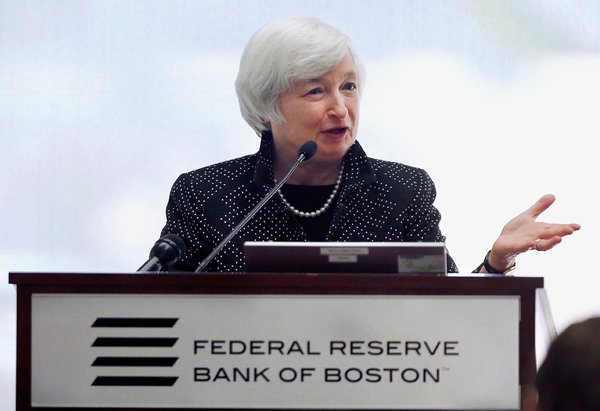
Janet Yellen used her role as Fed chairman to start a conversation on economic opportunity. Why are more Americans locked into a vicious cycle of poverty? “I cannot offer any conclusions. (But) I do believe that these are important questions.”

You bet they are. And thank you, for having the guts to say so.

Janet Yellen inviting a discussion on the growing gap between rich and poor
Fed Chairman Janet Yellen stepping out of her role to invite a discussion on the gap between rich and poor

Then, last evening I watched Pulitzer Prize-winning author Marilynne Robinson talk about, among other things, why we don’t seem to be able to have a civil conversation about anything that matters. I wish I had a transcript, so I’m paraphrasing, but in essence she marveled about our penchant for turning complex issues into a SNL skit. As above, so below: entertainment trumps facts and respectful debate.

Pulitzer Prize winning Marilynne Robinson on the dumbing down of our public conversations

Both Yellen and Robinson have white hair. If ever we wanted role models, here they are, juggling, multitasking their way through successful lives, showing the rest of us how it’s done. Both went to public schools; Robinson was a single mother. It’s interesting Yellen waited until she had the top job before speaking publicly about a topic outside of her mandate. She was a loyal vice chair. Unlike some of her colleagues, she supported her team.

My takeaway was this: “Don’t waste my time. Let’s get together to work on things that matter.”

Take a Moment to Be Quiet

It’s Sept. 11, which is now far enough in the past that many people don’t remember the horror of the day.

But there’s much to be said for pausing to remember that anything can happen at any moment.

Carve out a quiet moment.   (Courtesy of apps.carlton.edu)
Carve out a quiet moment.                                                                                                                                               (Photo courtesy of apps.carlton.edu)


Can Lassie be saved? When re-branding doesn’t work

I’m still reeling about Lassie. That the scion of a loyal, courageous, elegant line of war heroes (The Courage of Lassie) has been re-positioned as the “Kate Middleton of animals” is more than I can bear.

Lassie, enduring her rebranding as a product pitch dog.  Courtesy of The New York Times.
Lassie, enduring her rebranding as a product pitch dog.  (Courtesy of The New York Times)

Granted re-branding is tricky, as are brand extensions. Should this young Lassie have been a brand extension instead of a re-brand?  Can Lassie come home?

Case in point:  I’ve been admiring a new extension of a venerable local brand as it’s come together over the last several months.  The new building is adjacent to the original, so the relationship of mother-to-child is obvious. Of course, this is not Hollywood, but we’re getting close to it here in Austin, Tex.

The original, Fonda San Miguel, is a gorgeous place filled with a world-class art collection, food and drink. A welcoming, elegant restaurant with adjacent gardens.

It's the kind of restaurant eople take pictures of each other standing in front of
It’s the kind of restaurant where you go to curry favor.

Here’s the extension. It’s unannounced, unopened but rumored to be a tapas bar.  Perfect, no?

The new tapas bar of Fonda San Miguel in Austin, Texas.
The child of the grand Fonda San Miguel, just across the garden in Austin, Texas.  A bit of hipster funk.

The brand extension works because it contrasts with the original while maintaining the flavor. It’s unexpected, but it makes sense. (I sound like I’m at a wine tasting, don’t I?  But you understand what I’m saying.)

A lesson for Dreamworks?  Don’t tamper with an icon.  Did anyone ask Marilyn Monroe to lose weight?  Well, probably, but that’s another conversation.

Is it presumptious to compare a Hollywood icon to a local institution?  Perhaps. But then again why not, if something is to be learned?

Maybe Lassie’s great-great-great offspring should have been renamed “Lasi” and positioned as a fashion blogger?

University student-designed solar cars show a path to the future

Finding myself fretting about the future of mockingbirds in a changing climate, I ventured over to the Circuit of the Americas to see what the American Solar Challenge was all about.

University students, these from Michigan State, use competition to learn more about solar.

The weather had thrown a curveball, or to race aficionados, a chicane.  It was overcast and about 20 degrees cooler than your average July day in Texas.  No sun at a solar race makes for  a very slow pace.  But the crowd at the giant F1 track was coping gamely with long gaps between competitors. Student observers suspended high above the track were doing chin-ups in their  cages, on the lookout for approaching cars.  Enthusiasm remained high.

I wandered over to an open garage (pit?) to talk with the Michigan State team, which was engaged in some show-and-tell. Although they’d been disqualified, you’d never know it. “Don’t touch the arrays,” they patiently reminded the children who wanted to figure it all out by feel.

“It’s all about learning,” said Sean, a soon-to-be junior.  “Winning is icing on the cake, but it’s what you learn. We can’t wait til next year.”

I was curious how the team worked together.  Sean said they just figured out how to collaborate, but needed to do more of it.  “We need more ideas.”  A teammate chimed in, “Yeah, if you don’t have ideas, you’re frozen in place.”

Next year they plan to use a lighter material for the frame (it’s steel) and four- instead of a three-wheel design.  I don’t see these young people frozen in place. The team is losing three seniors to PhD. programs – Stanford and Michigan State.

We’re banking on these young people and those lucky enough to be like them.  We need the keys to trapping and commercializing photovoltaic energy; fortunately, the world seems to be kneeling at their feet.  Flash notice: The Abu Dhabi Solar Challenge will be held on an F1 track in January 2015, with financial support and partnerships available on a first-come, first-serve basis for 20-25 qualified university teams.

In the meantime, I’m channeling their attitude – about learning, failing and engaging.  I hope that’s the future.


Beyond Work Hard/Play Hard: Building a Resilient Culture

The most surprising aspect of a SXSW Interactive workshop on corporate culture was how few people showed up and participated.  “Beyond Ping Pong Tables: Building Better Companies” was by far the best discussion of that behavioral petri-dish we call culture I’ve ever attended.  Led by a fascinating leadership trio, it condensed experience from the nonprofit, Wall Street, entrepreneurial and corporate worlds:

  • Jessica Lawrence, executive director of the New York Tech Meetup
  • Rasanth Das, co-founder, Bhakti Center (and former Wall Street banker)
  • Vipin Goyal, founder and CEO, SideTour (and former McKinsey consultant)

    More than work hard/play hard:  Culture is a major success factor. Be intentional in cultivating it.
    Culture is a major organizational success factor. Be intentional in cultivating it.

The takeaway:  Each of us is a culture cop. Culture is everybody’s business. . Our values model our behavior, which shapes our culture.  It starts with the CEO, but everybody else is part of the  check and balance.

All too often this becomes a cult of CEO’s personality.  Vibrant organizations understand this and intentionally transform this misplaced focus on externals into an organization-wide investment in the values that shape people’s behavior.

Casual cultures break down under pressure, as do dysfunctional ones.  I’ve learned this the hard way first, as a veteran of IBM’s implosion in the 90’s, during the start up bust of the early 2000’s and again with a small agency.  Warning:  Disintegrating cultures are very painful and lead to their own form of PTSD.  Practical tips from Lawrence, Das and Goyal:

Hire for culture over competence; ask candidates:

            • What books are you reading?
            • What was the last thing you googled?
            • What do you watch on TV/movies?

Think of the employee handbook as an articulation of corporate culture:

  • Considering a new job?  Ask to read the handbook.
  • Check for vacation guidelines, maternity/paternity leave, and gauge it against your values
  • How does the physical space allow for interaction, concentration or lack of both?  Does it offer multiple functional spaces?  Common spaces for accidental intersections?

The hardest:  Spend time talking about culture. It may be your biggest success factor:

  • Sacred cow bbq, where people list their nonnegotiables on post-its, prioritize and distill them into a list of values.
  • Write a corporate obituary, what do you want customers, employees to remember?

Food for thought – and action.


Who Put Brussel Sprouts in Every Shopping Basket?

What I want to know is this:  Who engineered the comeback of brussel sprouts?  Did I miss the tweets?  Because the humble vegetable of my childhood, grey and waterlogged, has morphed into a supply side challenge.

Can farmers keep up?
               Can farmers keep up?

Was it Mark Bittman and those classy NYT spreads?  Some trendy chef in upper New York state, or even here in what was once a comfortably populist ATX (Tex Mex or a steak, anyone?)?

There’s been no humiliating name change (bruss?), as prunes have had to endure (dried plums?).  They look the same:  little cabbages, hard and round.  No labor-saving innovations;  still a somewhat tedious process that requires a colander, trimming, cutting, and unless you’re a roaster, a two-step cooking process.

They still, sauces and marinades aside, taste (and smell) like cabbages.

Was there a blog?  A reality show (an island, 20-somethings, a case of brussel sprouts and lots of conflict?)  Opeds?

Did Dr. Oz endorse them for their digestive qualities?  Was it the source-agnostic but ever-purist French?

Where is the marketing team?  I want to meet them.

Be Great

Each of us can be great — in our own way.  Great human beings don’t spring full-blown from Zeus’ head like Athena, the Greek goddess of wisdom and inspiration.  The trick lies in uncovering, then nurturing its seed.

Thanks to technology (and I include publishing), we’ve no shortage of examples — in business, the arts and politics.  We can read, see and hear the stories of people who discovered their gift and then overcame their circumstances, doubts and fears to be bigger, broader and richer (if that’s what they wanted).

Work at being great -- in your own way. (Courtesy of Greg Bartley/Camera Press, via Redux, The New York Times)
Work at being great — in your own way. (Courtesy of Greg Bartley/Camera Press, via Redux, The New York Times)

Many of us have to dig to find our seed of greatness.  Maybe it’s writing, or developing great relationships or designing gardens.  But believing in ourselves — and our unique greatness — is pivotal.  Otherwise, our hands are tied.  We fail to act.  So we have to look for examples and learn from others.

Take entrepreneurs.  Entrepreneurs are energizers.  They charge us up with their self-confidence and sheer drive.  Last week I sat in on a talk by John Arrow, the brilliant young CEO of Mutual Mobile.  Arrow told about his first entrepreneurial effort, a grammar school newsletter that was shut down for profiling students’ popularity.  (Sounds a little like a Facebook prototype, yes?) While his co-conspirators were punished by their parents, he was praised for his business acumen.  That chutzpah — and vision — has taken him far.

Or statesmen.  Nelson Mandela believed in a cause so great it dwarfed the failure and suffering he endured to become an icon of humanitarianism. Bill Keller‘s coverage drew from a 2007 interview.  Mandela was asked how he kept his hatred in check:  “… his answer was almost dismissive: “Hating clouds the mind.  It gets in the way of strategy.  Leaders cannot afford to hate.”  My sense is Mandela, although born the son of a tribal chief, was not always so adept a diplomat. I listened to a former colleague describe him as a “head knocker.”  If that’s the case, then Mandela had to master his anger to achieve his goals.

Or musicians.  A quote from the late, great Lou Reed, who as a young man had been through electroshock therapy, and in his music never seemed too concerned about popular opinion.  He followed his muse:

I’ve never thought of music as a challenge — you always figure the audience is at least as smart as you are.  You do this because you like it, you think what you’re making is beautiful.  And if you think it’s beautiful, maybe they think it’s beautiful.

As we wind down another year, rushing madly along, let’s go for one thing:  Let’s try for greatness.  Or as Steven Pressfield puts it,  … Follow your unconventional, crazy heart.  Do the work.

Stay Curious Despite the Shutdown: Try edX

“We’re looking for the international space station,” my elderly neighbors said as they looked up at the night sky.

“What does it look like?”  I asked.

The night sky on Oct. 13, 2013 in Austin, Texas.  That's Jupiter above the tree. Courtesy Night Sky Network.
The night sky on Oct. 13, 2013 in Austin, Texas. That’s Jupiter above the tree. Courtesy Night Sky Network.

“We’re not sure, but it’s supposed to be out here someplace.”

We spend a lot of our time looking for things without knowing exactly what we’re looking for.   Ideally, there’s a sense of wonder, but also frustration and alas, impatience.

Whether it’s a job, a new client or partner.  We know they’re out there, somewhere.  But where?

The trick is to stay curious, so curious we keep trying.

To keep my curiosity in tune, I’m trying our edX, specifically Dr. Micheal Webber’s Energy 101 MOOC.  I’ve been pleasantly surprised.

The content is terrific, especially the widgets.  I find myself sliding over maps of Europe, Africa, India and South America to get a sense of our world — in constant flux.  Want to see fracking in action?  Stephen Rountree’s 3D infographic is one of the best I’ve seen.

But it’s the sheer scope of the effort that sparks my imagination.  Comments and introductions from people all over the world – Iran, Palestine, Iceland.

It’s like the night sky; makes you think anything is possible.  (Even this photo, taken by intrepid volunteers on Astronomy Day 2013 by the Night Sky Network, despite the federal shutdown)