Leadership During a Crisis: Dallas Co. Sheriff Lupe Valdez on Police Shootings

A very, very sad week for our country: four shootings in cities across the country, with five police officers shot in Dallas during a peaceful “Black Lives Matter” protest. Sitting here in the middle of Texas, I am heartsick for my state and for Dallas, which for some reason has been a magnet for tragedy. Despite a vacuum (at best) of leadership among our state’s elected officials, I take my hat off to Lupe Valdez, sheriff of Dallas County.

Dallas Co. Sheriff Lupe Valdez, "I know at some point I'll cry," Courtesy of the Dallas Morning News
Sheriff Lupe Valdez, “At some point I’m going to cry. But right now I’m too busy.” Photo courtesy of the Dallas Morning News

Valdez, who is in her third term at the helm of a racially diverse county and the state’s second-largest city, spoke to NPR yesterday, responding openly and honestly to questions that would have made many others defensive (take note, Mrs. Clinton). She explaining why she was “not comfortable” with law enforcement officers’ wearing riot gear during citizen protests: “You put people in riot gear, you’re saying we’re expecting you to misbehave, so we’re ready for you….”

She closed with one of the most human “official” statements I’ve heard:

“I think – what I hear a lot and what I feel is – or what I’ve said a lot today – at some point, I’m going to cry. But right now I’m too busy. Right now we need to take care of things. But I think that’s important for all of us. At some point, it’s going to hit us. But right now we’re just, as I said, we’re good at crisis. We react. We do what needs to be done.”

Thank you, Sheriff Valdez.

What Does An American Look Like?

My friend Prithvi was sworn in this week as a U.S. citizen. Here’s an excerpt from our conversation about the experience:     Swearing in

The ceremony was beautiful.One thousand one hundred sixty-six (1,166!) people from 97 countries participated. After waiting outside for about 30 minutes, we took the oath and a lovely band played the “Star-Spangled Banner.”  It was an emotional moment.

Several judges spoke about the United States being a nation of immigrants and as new citizens, our enriching that heritage. They encouraged us to tell our stories and enrich America with our culture.

A woman judge told a story about a Bangladeshi immigrant who became a citizen.  When he was shot after 9-11, he sued to stop his assailant’s execution. We were strongly encouraged to vote:  There were voter registration desks in every corner of the building.

The head of the immigration service there, whose grandfather was from Mexico, asked us what an American looks like.  Then he said, “This!” and gestured at us.  Each country was called out, and the people of that country were asked to stand. Then he said, “Mexico,” and everyone remaining stood up.  There was roar from the stadium.

Prithvi is from Mangalore, India. She is brilliant and well-rounded: a technical manager at Apple, the mother of a three year old, the wife of an equally brilliant engineer.  She also runs a non profit for Indian children. I can’t imagine anyone’s taking issue with her becoming a citizen.

I asked her how it felt to be an American.

I don’t known what that means. I have felt American for a while.  And Indian.  That will not go away.

Prithvi’s experience was a reminder of what we’re about — and it’s not those plastic American flags realtors insist on sticking in everyone’s yard, nor the mattress sales, nor the grocery store aisles clogged with overflowing baskets.

At a time when our world’s politics are compared with — heaven forbid –“Game of Thrones,”  let’s try our best to rise to the occasion, to return some of what we’ve been given — to read, listen critically, write our elected officials and vote. Let’s try our best to make things better.


Brexit Threatens Growth in Austin and the U.K.

Editor’s Note:  This article was published by the World Affairs Council of Austin on June 21.

Fred Schmidt is unequivocal about the June 23 Brexit vote, the British referendum on whether the country should stay or leave the European Union, and its impact on Austin.

“Linking EU and U.S. economies with TTIP [the Transatlantic Trade and Investment Partnership] is where the future lies.  “It would be mind boggling for Britain to leave the EU and its massively successful economies of a union with linkages of economies and people.”

The start-up city takes London

Schmidt, an ebullient entrepreneur and director of international affairs for the Capitol Factory, was just awarded an MBE by Queen Elizabeth for his role in developing the economic partnership between Austin and Hackney. The relationship, which was formalized as a sister and science city partnership in 2014, serves as a springboard a partnership that’s expanding across London’s other 32 boroughs and into Europe. In fact, on June 23 Schmidt will be in London with United Kingdom Trade & Investment department, as part of the Austin delegation to London Technology Week, the annual festival of all things innovative.

It should be quite a week for Austin’s role as “the start-up city.”  London Tech Advocates, a private-sector led coalition of tech and community movers and shakers plans to announce its launching an Austin chapter to cultivate the sister and science city bond Schmidt and the Austin- Hackney team started, focusing on creative tech, gaming, education, life sciences and biomedical, food tech, fashion tech, mobility innovations, zero waste, and advanced manufacturing. The announcement will be made during London Tech Week.

A global protectionist environment

Since Britain would be the first country to leave the EU, no one know exactly the ramifications of an exit would be. Brexit polls showing the “Leavers” neck-to-neck with those who want to remain in the EU.  But the general tenor is that a Brexit would not be good news for Austin companies with offices in Britain, or for British-based businesses here.

“Only the economists and other realists are planning,” said Schmidt. “But the implications (of Brexit) are clear.”  That is, London would no longer be the default gateway to the European Union.

Then there is the headquarters question. “When considering opening a European headquarters, Britain is an automatic choice because of the shared language and access to the Eurozone. If Brexit happens, companies will need to calculate whether to open their headquarters on the continent or open a UK branch managed from either the continent, Ireland, or the U.S,” said Robert Bou, president of Austin-based Ashlar-Vellum which designs computer-aided design and 3D modeling software.

Those of you who were lucky enough to attend the Texas-EU summit in May heard Caroline Vicini, deputy head of delegation of the European Union to the United States, talk frankly about the challenges TTIP faces, one two major trade deals opposed by both presidential clients. Speaking of straight talk, protectionist policies stunt growth no regardless of size. (Slight tangent: For an intriguing view from the perspective of the Fortune 10, read General Electric Chairman Jeff Immelt’s graduation speech to NYU’s Stern School of Business.)

Though not everyone thinks Brexit would hinder London’s growth. Nowhere else can hope to compete with London’s status as “the talent magnet for Europe. No other place comes close,” Richard Florida, an urban theorist and director of cities at the Martin Prosperity Institute in Toronto, told Bloomberg Technology in February of this year.  Along with New York, “it is one of two economic centers of the world,” a reality that wouldn’t be significantly altered outside the EU.”

Life will move on  

Schmidt is sanguine. On June 23, “we’ll be cryin’ tears of joy or sadness in some pub that night,” said Schmidt, “And then life will just move on.”

A Marketer’s Lessons from Brexit

Ever failed to gain support for a smart, admirable product or campaign that seemed like a no-brainer?  Something like conserving water?  Attracting technical talent? Remote storage (until it became the “cloud”)?  Saving for retirement?

So it was with Brexit, a seeming no-brainer turned on its head by lackluster messaging, a failure to get voters to the polls and a strong political environment.

1. “Want to Make Sure No One Listens? Deliver a Boring Message

“One of the things that went terribly wrong with those who were campaigning for Remain was to find a passionate way to defend the European Union,” the English historian, commentator and Columbia University professor Simon Schama, told NPR when the vote to leave the European Union was announced.  “The point of the European Union was to be dull and boring rather than violent and aggressive and bellicose, which it have been for most of its history,”

A successful real estate saleswoman once told me that people buy by emotion, not reason. For Britons, the message of peace, protection and prosperity was drowned out a strong wave of  nationalism stoked by fears of uncontrolled immigration a remote central bureaucracy.   Emotion ruled.

2.  Apply the “what’s in it for me” (WIIFM) test

“A slogan and a message must be aspirational — either give people hope things will get better or that the bad stuff will stop — both, said Ruth Sherman, a political communications analyst, told The New York Times.  “I remember thinking when I first saw [one of Hillary Clinton’s taglines], ‘I’m with her’ — when I saw it, [I thought] ‘Really?’ It’s not my job to be with her. She should be with me.”

The message also has to be strong enough to move people to action. Although 75% of  British 18-29 year olds voted to remain in the EU, these voters did not turn out in sufficient numbers to make a difference in the final result.  And showing up, as Woody Allen reminds us, is 80% of success.

3.  Pay attention

Be it data, news reports or eating lunch with the troops, it’s important to keep you finger on pulse. The ‘Remain’ camp’s ‘Stronger Together’ slogan “failed to ‘personalize, individualize or humanize their campaign,” Frank Luntz, an expert on political messaging told The New York Times.  “The problem with the concept of ‘together’ is that it promotes groupthink…We are in an age of individual action, not collective responsibility.”

4.  We are doing business in an increasingly protectionist environment.

I hope by now you’ve read GE Chairman Jeff Immelt’s graduation speech to NYU’s Stern School of Business.)  Every company is on its own, he warns as “globalization is being attacked as never before. In the face of a protectionist global environment, companies must navigate the world on their own,” he said. “We must level the playing field, without government engagement.”

5.  Yes, it can happen.  Have a plan

The quote I remember most from my first interview with Fred Schmidt of the Capitol Factory was, “Only the economists and realists are planning.”  Everyone thought it was a done deal: Britain would stay in the EU.  Today, United States’ seventh largest trading partner is paralyzed, rocked by what could never happen.

Pay special attention, technology companies.  As Immelt reminds us, the Internet has connected us, but it has not created jobs. Many are questioning the value of globalization and business interests as “elite” and subject to distrust. Stay informed and participate. Organizations like the American Electronics Assoc., the Global Entrepreneurship Summit, many of which cluster around universities, educate elected officials and lobby business interests.  Be active, there is strength in common interest.


Don’t Let Fear Be Your Excuse

I had lunch recently with my friends Jane and Larry Graham. Their granddaughter Caroline Richards died in January from osteocarcenoma, a rare form of bone cancer.  She was 12 years old. Caroline was a sunny day kind of child: She favored dancing over walking and singing over whispering.  She had over 30,000 followers on Twitter. She embraced her disease by giving people presents, making them laugh, and celebrating her favorite pop band One Direction. Caroline refused to forfeit her time to fear, self-pity or regret.

Caroline Richards faced a rare form of cancer by refusing to let fear and pain rob her of joy.

I’ve thought of Caroline many times since the Saturday afternoon I squeezed into her funeral, a standing-room only affair packed with people of all ages and walks of life, many of whom had big bows in their hair like the kind Caroline wore – when she had hair. There was dancing in the aisles and a great deal of singing to honor Caroline’s philosophy: If life throws you a bum rap, put a bow on it and throw a party.

Easier said than done, we say. Some of us are tragedians; we tend to look at the quieter, sad aspect of life. But the lesson Caroline leaves us is to not be undone by mere predisposition. No indeed. Do not let fear be the excuse.

Most of us are blessed. We don’t face major life-and-death situations.  But fear is an insidious life-stealer.  Ever since I can remember I’ve suffered from paralyzing stage fright. I have a vivid memory of standing in front of my eighth grade speech class and leaning on a chair because my knees were shaking so hard. Stints in community theater and Toastmasters have alleviated it, but I’m still terrified when I face an audience. My task is to prepare, open my mouth and say my piece. Telephone calls have always had the same effect on me, an odd twist for someone in my profession.

Caroline's Brave Bunny Foundation awards a children who show exceptional courage with this bunny.
Caroline’s Brave Bunny Foundation recognizes children who show courage.

Caroline’s mother, Lauren, gets it. Caroline didn’t live to do what she’d wanted to do, help raise money as an ambassador for research to help save other children from the cancer that caused her so much suffering.  So her mom has taken the bull by the horns in Caroline’s honor. Lauren is starting the Caroline’s Brave Bunny Foundation that, among other things, awards a (stuffed) bunny to children who show their own particular brand of courage.

The award — a bunny with “Brave” embroidered on one ear and the child’s name on the other — recognizes courage, not winning. The victory lies in moving through the fear, be it finishing school, or mastering a particular skill. Whatever it may be. Fear is a very personal crippler.

So remember Caroline and the Brave Bunny next time you pick up the phone to make that cold call. Or take a job you don’t think you can do. Scale your guts, and think about the time you have on this planet. Let’s not let fear be our excuse.

SXSW Interactive: Can design change the way we think about healthcare delivery?

Can we use the creativity and rigors of the design process to change how we deliver health care?  After a week of SXSW Interactive, I’d say yes, it makes sense and certainly couldn’t hurt. After over a decade seeing two parents through the Kafka-esque twists and turns of the health care system, I consider the American approach to delivering medical (and elder-) care on par with Chinese water torture, only more expensive.

Pauline van Dongen's solar-paneled dress prompts us to re-examine why we wear clothing. Why not apply that same thinking to health care?
Pauline van Dongen’s solar-paneled dress prompts us to re-examine why we wear clothing. Why not apply that same thinking to health care?

Here in Austin, The University of Texas announced a radical-sounding partnership between the Dell Medical School and The University of Texas Dept. of Art called The Design Institute for Health. The newly-formed group, led by two veterans from IDEO, the design firm famous for its longstanding relationship with Apple, are part of a push to figure out how to deliver community-based health care funded based on the “value it creates.”  The medical school’s charismatic dean, Dr. Clay Johnston, is inviting hospitals, doctors, nonprofits and the community as a whole to help re-think what the farm animals in the movie “Babe called “the way things are.”  I can’t imagine many things more challenging, or exciting.

If you have any doubts about the mind-unleashing power of design, I refer you to Paola Antonelli’s SXSW keynote, “Curious Bridges: How Designers Grow the Future.”  Antonelli, the curator of architecture for the Museum of Modern Art, guides us through a series of examples of design that provokes us to re-think the “way things are.”  Examples include a belt that simulates menstruation (to, one presumes, produce empathy in the opposite sex) and wearable clothing made with 3D printers that simulates the body’s movement created by Pauline van Dongen, who wore a sweater made of flattened solar cells during her session later that day. Think about it, technology-based clothing that’s comfortable, practical and adaptable.

Design was the subtext of a fascinating but sparsely-attended talk by Eric Topol’s called “Democratizing Health Care.” Here is a doctor, researcher and (I have to assume) AMA member, who understands that people want healthcare to be simple, affordable and effective. After opening his talk by citing medication errors as the fourth cause of death in the United States, Topol showed a portfolio of on-demand tools — a wrist band to detect seizures, an app to measure arrhythmia, or using a smartphone to digitize the heart — technology moving at the pace of Moore’s Law to troubleshoot, coordinate and identify illness — without causing the patient to go broke or die.  I don’t think any of the devices Dr. Topol showed were ready for prime time, but they they — or improved versions — will be, and they will advance the revolution.

Why not?  If we can cast off stilettos and create sympathy for PMS, why not re-think health care as a human service for real people?

Appreciate the process

I am firmly convinced there are no straight lines. The goal may be clear – a speech, successful meeting, signed contract — but the path rarely maps with the project plan. A colleague once told me she kept on course by reminding herself to enjoy the process.  These days, I try hard to apply that formula to both my work and my life.

There are no straight lines in life or in work. (Photo courtesy of pimpmycom.com)

A friend whose long career includes a Fulbright at age 67, assignments on four continents, a tenured professorship and a close network of fascinating friends told me recently that he realizes now that he was just “stumbling along,” working hard, yes, but seizing opportunities and accepting setbacks as they appeared.

Another term for “stumbling along” might be innovation. A client of mine sells small-batch Irish whiskey, and as I listened to one of his distillers talk about merging technology (containers, process) with the centuries-old tradition of whiskey making, I thought, “no straight lines, ” rather a series of trials with error and the occasional stellar success. How many times have we heard the homily: many of life’s failures are people who did not realize how close they were to success when they gave up.

As much as I think I would like a “happily ever after” plot line, admittedly, it’s been the bumps in the road that have taught me the most and made the trip interesting.  I certainly didn’t plan to take a career hiatus in my 50’s to care for my parents, but I did, dialing back my professional activities and focusing on managing their finances, medical care and stops at more “care continuums” than I care to count.  It didn’t make me rich, but it gave me a sense of compassion that I never would have gained in the corporate world.

Remembering this, I remind myself not to panic if the plane is cancelled or a stray dog appears on the doorstep just as the project is due. It’ll be okay; there are no straight lines.

Mercury Retrograde and Other Uncontrollable Mysteries

Somehow in the hurry-scurry of the new year, I missed Kristin Dombek’s beautiful piece in last Sunday’s NYT, “Retrograde Beliefs, In defense of magical thinking.”  Read it if you haven’t because Mercury takes it first 2015 trip backward starting next week.  I know this because one of my A-priority New Year tasks is to block out on my calendar the four times a year it happens. I draw a thick yellow line through those 16 (give or take a couple of) weeks so I’ll know not to get frustrated, to finish incomplete projects and not start new ones. To neither sign contracts nor make big commitments.

The stars' secret influence is only one thing we try to control. Illustration by Javier Jaen, courtesy of The New York Times.
The stars’ secret influence is only one thing we try to control. Illustration by Javier Jaen, courtesy of The New York Times.

Dombek nudged me with her graceful, faintly scientific reminder: Jousting with Mercury is a mortal stab at codifying mystery. Forget it. Alas, for us planners and plotters, Mercury is just the tip of the iceberg.

In 2008, on the brink of the Great Recession, I buried a St. Joseph statue in the front yard of a house I wanted to sell. I bought the statue under false pretenses, telling the cashier at the religious supply store that it was for my mother, who collected Nativity sets. That was true, but I had a distinct feeling I would be punished for fudging on the larger truth.

There were specific instructions for burying the saint. I researched the procedure and measured the distances carefully – so many steps to the east of the front door, so many steps from the street. Even so, when the house sold and it was time to dig St. Joseph up, I couldn’t find him.

This worried my mother, the collector, who’d put Mary and baby Jesus on the shelf beside her chair, awaiting the carpenter’s arrival.

“Where’s Joseph,” she asked.

“He’s on a business trip,” I answered. “He’ll be back.”

But he never returned, and Mary remained a single mother, much to my mother’s distress.

I’ve wondered about the unintended consequences. The house I sold is still occupied by the family that bought it, but I’ve moved every couple of years since then.

Then there’s the blog I started following a series of family deaths. It was an exercise in catharsis, and when it was over, I’d had I enough. I deleted my connection to the content, but I couldn’t delete the content itself. It’s out there, like a piece of floating debris or an orphan planet. Sometimes I want to reclaim it, but I can’t. The posts dangle in the ether, that great celestial dumpster.

There’s a scary freedom in this lack of control, like releasing a captive wild thing, and a reminder that I’ve never been, nor will I ever be in control. Which is the point. It is a mystery.

Beyond likeability: Women leaders on issues that matter

Perhaps we’re getting over the likeability debate. This week, two women at the top of their games cut to the chase and point out a few elephants in the room.

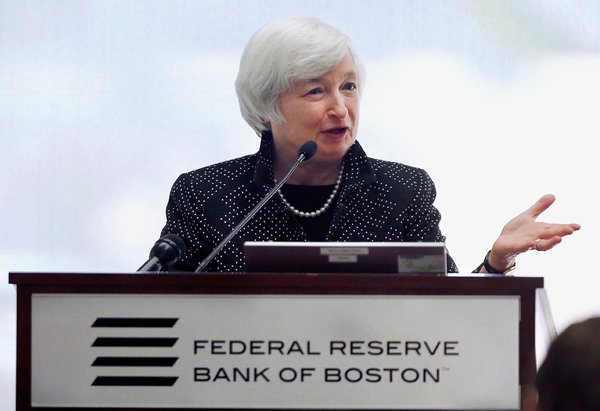
Janet Yellen used her role as Fed chairman to start a conversation on economic opportunity. Why are more Americans locked into a vicious cycle of poverty? “I cannot offer any conclusions. (But) I do believe that these are important questions.”

You bet they are. And thank you, for having the guts to say so.

Janet Yellen inviting a discussion on the growing gap between rich and poor
Fed Chairman Janet Yellen stepping out of her role to invite a discussion on the gap between rich and poor

Then, last evening I watched Pulitzer Prize-winning author Marilynne Robinson talk about, among other things, why we don’t seem to be able to have a civil conversation about anything that matters. I wish I had a transcript, so I’m paraphrasing, but in essence she marveled about our penchant for turning complex issues into a SNL skit. As above, so below: entertainment trumps facts and respectful debate.

Pulitzer Prize winning Marilynne Robinson on the dumbing down of our public conversations

Both Yellen and Robinson have white hair. If ever we wanted role models, here they are, juggling, multitasking their way through successful lives, showing the rest of us how it’s done. Both went to public schools; Robinson was a single mother. It’s interesting Yellen waited until she had the top job before speaking publicly about a topic outside of her mandate. She was a loyal vice chair. Unlike some of her colleagues, she supported her team.

My takeaway was this: “Don’t waste my time. Let’s get together to work on things that matter.”

Can Lassie be saved? When re-branding doesn’t work

I’m still reeling about Lassie. That the scion of a loyal, courageous, elegant line of war heroes (The Courage of Lassie) has been re-positioned as the “Kate Middleton of animals” is more than I can bear.

Lassie, enduring her rebranding as a product pitch dog.  Courtesy of The New York Times.
Lassie, enduring her rebranding as a product pitch dog.  (Courtesy of The New York Times)

Granted re-branding is tricky, as are brand extensions. Should this young Lassie have been a brand extension instead of a re-brand?  Can Lassie come home?

Case in point:  I’ve been admiring a new extension of a venerable local brand as it’s come together over the last several months.  The new building is adjacent to the original, so the relationship of mother-to-child is obvious. Of course, this is not Hollywood, but we’re getting close to it here in Austin, Tex.

The original, Fonda San Miguel, is a gorgeous place filled with a world-class art collection, food and drink. A welcoming, elegant restaurant with adjacent gardens.

It's the kind of restaurant eople take pictures of each other standing in front of
It’s the kind of restaurant where you go to curry favor.

Here’s the extension. It’s unannounced, unopened but rumored to be a tapas bar.  Perfect, no?

The new tapas bar of Fonda San Miguel in Austin, Texas.
The child of the grand Fonda San Miguel, just across the garden in Austin, Texas.  A bit of hipster funk.

The brand extension works because it contrasts with the original while maintaining the flavor. It’s unexpected, but it makes sense. (I sound like I’m at a wine tasting, don’t I?  But you understand what I’m saying.)

A lesson for Dreamworks?  Don’t tamper with an icon.  Did anyone ask Marilyn Monroe to lose weight?  Well, probably, but that’s another conversation.

Is it presumptious to compare a Hollywood icon to a local institution?  Perhaps. But then again why not, if something is to be learned?

Maybe Lassie’s great-great-great offspring should have been renamed “Lasi” and positioned as a fashion blogger?