A young performer challenges me to build alliances, broaden my associations with people who are not like me; to be active in pushing for change.
In late July of 2017, I pushed my way into an airless warehouse-turned performance space to be part of an enthusiastic audience for this year’s “Sixty by 60,” the annual fundraiser for the Fusebox Festival, a not-to-be-missed series of glorious international art, dance, opera and all-round inventiveness that happens every Spring in Austin, Texas. For free.
Fusebox’s 60×60 gives performers 60 seconds to say what they want to say.
The piece I remember most vividly featured a young African-American woman wearing a white t-shirt that read in bold, black letters, “Be Nice.” A small woman, standing in the middle of the stage, she invited the 200 of sweating her sweating audience to pick up the white t-shirts she’d placed on their chairs and wave them over head, joining her in shouting “Be Nice!” to loud music.
The reference to the iconic New Orleans R&B queen Irma Thomas’ white handkerchief was there: Put your backfield in motion, even when your audience waves Confederate flags.
But 2017 brought us a new president, Travis Kalanick, Harvey Weinstein, shootings by and of policemen, fake news, children gunned down in churches, and more. There is a lot of material to work with during 2018.
Though if it were up to me, a woman raised with the same words, I would make it BeNice2.0 to make it clear we’re done with the old “nice at a price.” We don’t need enemies. We need collaborators, supporters, friends, critics who are willing to listen.
The other thing I like about BeNice2.0 is that it takes us beyond “be kind,” unquestionably a necessary and admirable life rule. To me, BeNice2.0, suggests a more active, engaging stance. Ask for what you need, point out unfair behavior, propose better approaches. Be active; #BeNice2.0
I fought my way through Friday night traffic to see my friend Shiva’s daughter perform in their Christmas play, “A Play in a Manger.” I expected Mary, Joseph and a few shepherds. What I saw was an hour-long rock-and-roll production built around a plot line of “bigger is not better.” Mary and Joseph were supplanted by a production manager and a worried production crew and cast, some 20 kids in all.
Everybody got a speaking part, reaching up to the standing microphones like little gold fish getting their supper.). Shaylee, whose family is from Iran, added what I learned later was an improvised dance number for her part. The epilogue was this: “Christmas is not about Walmart or Saks. ipads or iphones.” That is, it’s not about stuff, because stuff costs a lot of money.
I thought about this when I stopped into my local Wal-Mart for socks and was astounded to find all of the cashiers were gone, erased. In their place were scanners, waiting for a credit (or debit) card. When I asked the attendant where those workers — mostly women, mostly African-American, mostly over 40 — I got a shrug.
According Fortune, citing a McKinsey Global Institute report released in November, “between 400 million and 800 million workers around the world could be displaced by automation by 2030.” By comparison, the 2016 population of Texas was 27.36 million. Think about that — that’s 15 Texas’.
Most affected will be jobs that involve collecting and processing data – everything from accounting to fast food. The report predicts the pace of displacement will be unprecedented, concluding “There are few precedents in which societies have successfully retrained such large numbers of people.”
In a recent column, David Brooks had some suggestions for lawmakers to consider, a list that targets practical but oftentimes insurmountable barriers like making it easier for people to:
Get to work
Get a license
Enter fast-growing professions like health care
As ex-offenders, navigate the application process
It’s painful to experience the season as one of “haves” and “have nots,” and easy to turn away we dash through the holiday fully armed. But here’s hoping each of us has an opportunity to pause and reflect, not just on how very lucky we are, but how we can help those who are less so, navigate these times.
Each of us is tasked with playing the hand we’re dealt. Some of the cards are stacked in our favor; many are not. Nonetheless, it’s a package deal, and the better we understand those cards, the more we’ll be able to accomplish.
I thought about this after reading David Remnick’s sad portrait of Hillary Clinton, in which she blames her gender — among other things — for her loss. Mrs. Clinton is a super-sized public figure and a role model of tremendous potential. Perhaps it is a necessary catharsis, but I was disappointed to read that she chose to waste her time.
What could have been: The cover The New Yorker Had Planned for Hillary Clinton’s victory in the 2016 election. Courtesy of The New Yorker, Sept. 24, 2017
It’s helpful to understand why we fail. But blame is time consuming. This I know: the faster we lay it aside, the less time we waste. Contrasting the Clinton debacle with Al Gore’s loss to George W. Bush in 2000, Remnick notes that Gore was 52 at the time; Clinton, 69. Gore had time to grieve, move on, make a fortune and win a Nobel Peace Prize. Clinton is 69. “She will have a hard time finding a similar peace or place in public affairs.”
Oh, gosh I hope not.
The “genderizing’ conundrum
It’s always worrisome when a noun becomes a verb. So let’s step back. The 19th Amendment was passed in 1920. When I was in high school, girls weren’t allowed to learn small engine repair; we were shuffled off to home economics and white sauce. When I left school and took a temporary job with H.Ross Perot’s Electronic Data Systems, I was humiliated by a fellow (male) employee’s passing me a handwritten note warning me that my sleeveless dress was inappropriate because it revealed my arms. I left the job.
Mrs. Clinton, like Texas Governor Miriam “Ma” Ferguson who presided in the 1920’s and 30’s, rose to power on the coattails of her husband. She, like Sherry Lansing in Hollywood, Toni Morrison in literature, and Indra Nooyi and others among the Fortune 50, carved their roles out of a male tradition There was no can-do legacy. Unlike Athena, the goddess of wisdom, who sprang fully formed from Zeus’ head, confidence is earned, not awarded.
Focus on making the world a better place — starting where you are
So why not focus our time and energy on moving forward? The fields of law and medicine are being transformed by women. I look forward to seeing similar trends in education and politics (you go, Mrs. Clinton). But no question, it’s a slippery slope. Every day I see young women reverting to baby talk, tantrums, behavior that may have worked in middle school, but is cringe-making in the workplace.
We have a limited time to do what we want and need to do. Life tosses storm debris in our way. I don’t know how many times I said, “I can’t find the job I want until after my mother dies.” I didn’t want to face the conflict and ultimately wasted precious time blaming absent siblings, geography — and gender — for lost time and opportunity.
It was a waste of time. Ultimately, we’re shaped by the battles we fight, and its our ability to accept our faults and failures that make us role models.
Rushing to work one morning last week, I listened to Mihir Desai talk about his new book The Wisdom of Finance: Discovering Humanity in the World of Risk and Reward. The topic is bankruptcy; the lesson: Life is chaos, and our task is to navigate through the it. He kicked off the interview with an anecdote about American Airline’s 2011 bankruptcy filing (when the stock fell 79%):
The first CEO said for a long time he’ll never go bankrupt, because it was his duty to make sure every obligation gets paid off. Of course, he gets dragged into bankruptcy at the very end, they switch the CEO. The second CEO comes in, restructures all the obligations, guts the pensions. But American Airlines goes on to live another day. So the idea there is, you know, who’s the hero of that story? Is it the guy who said, “I have to stand by all my obligations,” but took the company down? Or the guy who said, “I actually got to manage these conflicting obligations”?
Employees, or many of them, kept their jobs, and shareholders came out way ahead. Maybe the lady wasn’t as advertised, but she was a better option than the tiger. So it goes with the ways we manage not just our working lives, but our personal ones as well.
Conflicting obligations come at you from all directions
“If it weren’t for you I would have conquered the world by now.”
Unexpected interruptions — kids, divorce, illness, death — not to mention layoffs, separations and unplanned early retirement intrude. Financial hardship complicates things.
Living longer + Putting yourself last = Poverty
Women are particularly vulnerable to the call of obligations. We tend to put others’ needs before our own, although perhaps this trend will shift as we evolve and more men take on caregiving responsibilities. But as it stands now, Kerry Hanson’s “Money Worries” column is a wake-up call:
Women were 80 percent more likely than men to be impoverished at age 65 or older while women age 75 to 79 were three times more likely to fall below the poverty level than men the same age.
When I turned around after taking time off to care for my parents, I fully expected to step back into a job comparable to the one I’d left. But someone had moved that career ladder. It’s taken years, and a few unplanned twists and turns to accept where I am professionally. I realize now that if I’d been less focused on doing everything perfectly and more on my future, I’d be in a better position financially.
Health care expanses: A ticking time bomb
Changes to health care policy pose a real threat to anyone over the age of 65 who does not have robust retirement savings. Today 60 percent of the elderly in nursing homes are on Medicaid. Many have spent their savings on assisted living and residential care. Getting old is expensive. According to Hanson, a healthy 65-year old woman retiring in 2016 will pay $300,000 on Medicare premiums and out-of-pocket costs for hearing dental and vision care by the time she reaches 89. That, of course, is in addition to living and personal care expanses.
Stay in touch with your possibilities
Do what you need to do to keep a firm footing on that career ladder. But don’t get rattled if something knocks you off. Expand your thinking and your network.
Desai’s interview closed with a tip of the hat to Martha Nussbaum’s “The Fragility of Goodness” and the example set by the ancient Greeks:
Fundamentally, this is about undercutting the idea that you have to follow duty. Most Greek tragedies are about people who have these conflicting obligations, and it’s a mess, and you have to navigate them. And she says that’s a good life. If you don’t have conflicting obligations, you’re doing something wrong.
So, it is as it’s always been. Keep working. Do your best; take smart risks and most of all, take care of yourself.
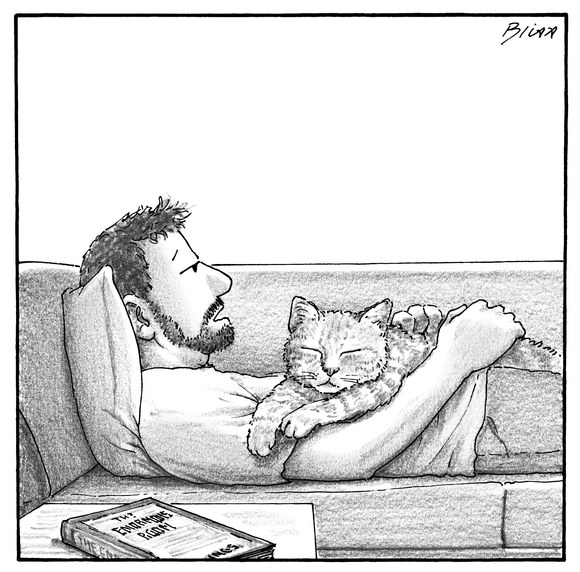
* Cartoon is courtesy of Harry Bliss and The New Yorker, March 18, 2016.
I recently went to the IBM Amplify conference, which was built around IBM’s cognitive offering, Watson. It was, of course, all about knowledge and skills. Although technology majored, human skills were also a theme, and I raced around trying to keep up.
Girls who code and more
IBM Chairman Ginni Rometty closed her keynote by recognizing three young women from California who excelled in IBM P-Tech six-year high school schools, offering those lucky students jobs as IBM interns. Skills were visible through partners: CoffeeBean and its Soical-ID, BlueSky CloudCommerce, Bridge Solutions, Lightwell fulfillment. Rocket Fuel, and SapientRazorfish — all driving, extending, the cognitive technology into their respective sectors.
IBM has deep experience in getting the right skill sets from its people, and Marc Benioff of Salesforce was there to represent a new generation of companies that underscore the value-add of ongoing training and education.
Business and jobs policy
Benioff — an innovation evangelist — referenced a meeting he and Rometty (among others) recently attended with President Trump:
“I want to thank all the business leaders that have joined us to discuss a subject that’s very important to me: Training our workforce for the 21st century, especially in respect to manufacturing jobs,” CNN quotes Trump as having said during that meeting. “Here in the United States, companies have created revolutionary high tech and online courses.”
More to come in this area, no doubt.
H-1B visa applications out tomorrow
H-1B visa applications are due out tomorrow. The U.S. Citizenship and Immigration Services announced quotas will remain the same despite proposed changes, and some 85,000 applications will be available to tech companies. In the past, the visas have primarily been gone to professionals from India for IT jobs, and although data shows there has been a small impact on tech sectors wages, overall the program has demonstrated it enhances innovation, lowers consumer prices and boosts company profits.
It’s good to know there’s a larger discussion on jobs and skills. But in the end, each of us is responsible for keeping our own skills up-to-snuff, and making sure elected officials and our professional communities help in any and all ways they can. Skills are the best renewable strategy we have. None of us should be sitting on our hands (or laurels).
Two statistics alone — that 96 percent of the world’s consumers and 80 percent of the world’s purchasing power are outside the United States — should insure our attention is riveted on the first of President Obama’s signature trade deals, the Trans-Pacific Partnership (TPP), as it bobs before an un-receptive Congress in a lame-duck year.
Ambassador Charles Rivkin, the State Department’s assistant secretary of Bureau of Economic and Business Affairs
This week TPP evangelist Charles Rivkin was in town to talk about the state of the deal and its benefit to the small businesses and tech startups that make up 95% of Austin’s economy. Ambassador Rivkin is no empty suit. His blue-chip credentials in technology, entertainment and business include negotiating the $1B sale of the Jim Henson company. A self-effacing speaker, he cited a nickname, “Don Quixote,” for promoting causes he believes in (like President Obama).
Trade is a complex topic that quickly becomes emotional. But Ambassador Rivkin did something interesting: he inched the discussion out of the “what” category (jobs) and into another, more properly labeled “how.” Framing TPP as a once-in-a blue-moon opportunity to “raise the standards of international trade” — climate change, endangered species, human rights — while also touting the benefits to specific sectors of the economy. In technology, for example, TPP is the first trade deal to address intellectual property.
Windmill alert: Watchdog groups like the Electronic Frontier Foundation and Public Citizen oppose the deal, which doesn’t go far enough for their respective publics. EFF in particular is worried the deal will hamper investigative journalism and openness while endangering privacy. Nobel Laureate and Columbia business professor Joseph Stiglitz, an advisor to Mrs. Clinton’s campaign, is also against it, pointing out that financial industry, as always it seems, gets off lightly, as do pharmaceuticals and big business in general.
But other voices support Ambassador Rivkin’s argument. The New York Times’ Nathaniel Popper’s nonlinear look at trade deals cites TPP supporter David Autor (“China Shock”):
Courtesy of Paul Windle, the New York Timescites TPP supporter David Autor (“China Shock”): TPP:
“The gains to the people who benefited are so enormous — they were destitute,m and now they were brought into the global middle class…The fact that there are adverse consequences in the United States should be taken seriously, but it doesn’t tilt the balance.”
In other words, trade can be seen as a tool to offset economic aid, or as Popper concludes, the benefits of trade have to be evaluated on both sides of the transaction.
Nobel Prize winner Paul Krugman is a bit pithier: “Politicians should be honest and realistic about trade, rather than taking cheap shots. Striking poses is easy; figuring out what we can and should do is a lot harder.”
Any way you cut it, I’m glad we have a savvy Don Quixote at work on TPP.
When I think of horrific meeting experiences, my mind rewinds to a hands-on seminar I led years ago for Apple. The objective was to introduce teachers to Apple’s desktop. It was a group presentation with auditorium-style seating and keyboards for participants to use in conjunction with the talk. About 10 minutes into my sch-peel, a tiny grandmotherly-looking woman stood up and said to the group: “We’re not idiots. Why do we have to listen to this person, let’s just do this!” And away they went, clicking happily along in utter chaos. That was point my boss walked in. Needless to say it was an interesting debrief.
The 20th century approach to informing, educating and convincing a group of people.
I thought about that woman this week during a Liberating Structures workshop led by Keith McCandless (who wrote the book) and Anna Jackson who spearheads an LS meetup group here in Austin. Is there a better way to inform, collaborate, teach and motivate a group of people? I’m a newbie but I’d say the tools they introduced me to are the best I’ve seen so far. I can see how they could work in all kinds of organizations. The idea is to tweak the feng shui of group interactions – topic, space, pacing, participation – and deploy a set of tools that better focus and distribute the conversation among the people who matter.
Are there more possibilities here? Bigger group, more leaders. See the 1-2-4-All tool.
You can read more on the Liberating Structures website. It lists all the tools and gives you a menu of when/how to apply them.
Since I haven’t applied it yet, the results are theoretical. But hey, if it works for The World Bank and The Gates Foundation, I’m all in. I’m intrigued about seeing how the tools would work cross-culturally, in situations where some of the participants are remote (there’s a technology conversation) and when selling one’s ideas to executives.
More to come. I only wish I, like Merlin, could live backwards: Just think how I could have helped and gained from that woman who was so frustrated and anxious to learn so long ago. I hope she’s running a company somewhere.
Editor’s Note: I was thinking about this post in terms of a session on Predictive Adaptation I sat in on last month. Dr. Liz Alexander moderated. She is considering a book on the subject which boils down to:
Can we stay tuned in enough to adapt prior to a change in our marketplace?
As the shelf life of companies grows shorter and shorter, the ability to adapt is on the short list of survival strategies. How do we cultivate it? One way is to not be stuck in our habits.
…
I’m a tea drinker, I have a teapot with an infuser, numerous immersion devices and a cabinet stuffed full of teas – black, herbal, medicinal, green. When I drank coffee, it was the same scenario, with different props. My freezer was full of Peets’ (now, alas, part of Starbucks) Major Dickinson blend and my cabinet, coffee brewers — drip, stovetop, percolator, French and Italian press – you get the drift.
Habits can lock us into rigid ways of thinking and doing. The solution? Try something new.
Two weeks ago I ran out of tea. I reordered in a such a panic that I used an old address. My tea — a special blend I’d grown to depend on to get me out of the door in the morning — never arrived. The tea blender refused to fix the delivery snafu. So I didn’t reorder.
That’s how one habit (getting in a snit when things didn’t go my way) forced me to re-evaluate another (my tea drinking compulsions). I was forced to rethink that morning ritual. Now I’m brewing tea bags (Choice) I buy at the grocery store. I don’t enjoy my tea nearly as much, but it’s saving me time. Unintended consequence: I’m actually getting to work on time.
Habits can be helpful, but they can also lock us into position. I’ve noticed that whatever it is hoard is a habit – wine, ice cream, tea, coffee, graham crackers. In the same way, my response to the tea blender was a habit — he chided me about my carelessness, I felt like a bad child, and I didn’t want anything more to do with him. Other habits I’ve flagged since my tea disruption:
Who I greet in the morning
Where I walk the dog
What I do with my spare time
Who I telephone to spend time with
How I think about my abilities (and shortcomings)
The books I read
How I view people with ideas that are different from mine
A search on “habits” took my to former Googler Matt Cutts’ Ted Talk, “Try Something New for 30 Days.” (Editorial note: Why is the guys can look like slobs and the women have to look like they’re ready for the Academy Awards?) Regardless, I’ve resolved, for at least 30 days (when Choice tea bags will probably already be my new habit), not to reorder tea. We’ll see what happens.
If a lifelong attraction to fortune tellers has taught me anything, it’s that the future never turns out according to plan. And a planner I’ve always been.
So I was fascinated when Dr. Liz Alexander posed the question: Can we adapt predictively? That is, can we read trends wisely enough to see what will be required for a future that’s still around the corner?
Liz, who among other things, guides thought leaders through the process of articulating and packaging their theories, pointed out that if:
The past is a predictor of the future
Corporate shelf life continues to drop (it’s now in the low double digits)
We remain flexible professionally, accepting that each of us will have multiple professions during our working life
Then, if we pay attention to mega trends, we can determine where our professional strengths can best be applied
So much depends on seeing opportunity when it presents itself. I pulled myself away from watching the Democratic National Convention to write this. Al Franken, former comedian, current U.S. senator spoke, and I was struck by Gail Collins’ oped piece pointing out that Hillary Clinton is running for president at a time when most women are thinking about gardening, grandchildren and the occasional cruise.
These are remarkable people, obviously, but they are also tips of an iceberg of change, reminding us to stay flexible, pay attention and don’t be afraid of opportunity. Maybe that in itself is predictive adaptation.
A very, very sad week for our country: four shootings in cities across the country, with five police officers shot in Dallas during a peaceful “Black Lives Matter” protest. Sitting here in the middle of Texas, I am heartsick for my state and for Dallas, which for some reason has been a magnet for tragedy. Despite a vacuum (at best) of leadership among our state’s elected officials, I take my hat off to Lupe Valdez, sheriff of Dallas County.
Sheriff Lupe Valdez, “At some point I’m going to cry. But right now I’m too busy.” Photo courtesy of the Dallas Morning News
Valdez, who is in her third term at the helm of a racially diverse county and the state’s second-largest city, spoke to NPR yesterday, responding openly and honestly to questions that would have made many others defensive (take note, Mrs. Clinton). She explaining why she was “not comfortable” with law enforcement officers’ wearing riot gear during citizen protests: “You put people in riot gear, you’re saying we’re expecting you to misbehave, so we’re ready for you….”
She closed with one of the most human “official” statements I’ve heard:
“I think – what I hear a lot and what I feel is – or what I’ve said a lot today – at some point, I’m going to cry. But right now I’m too busy. Right now we need to take care of things. But I think that’s important for all of us. At some point, it’s going to hit us. But right now we’re just, as I said, we’re good at crisis. We react. We do what needs to be done.”





 Chrysanthemum Marketing